Featured
Table of Contents
Signal Kinds in Angular 21 replace FormGroup discomfort and ControlValueAccessor complexity with a cleaner, reactive model built on signals. Discover what's brand-new in The Replay, LogRocket's newsletter for dev and engineering leaders, in the February 25th issue. Explore how the Universal Commerce Procedure (UCP) allows AI agents to get in touch with merchants, deal with checkout sessions, and firmly process payments in real-world e-commerce circulations.
This post explores six typical mistakes that obstruct streaming, bloat hydration, and produce stale UI in production.

2026 Into Soft Pvt. Ltd. If you desire, go Laravel for PHP or Django for Python.
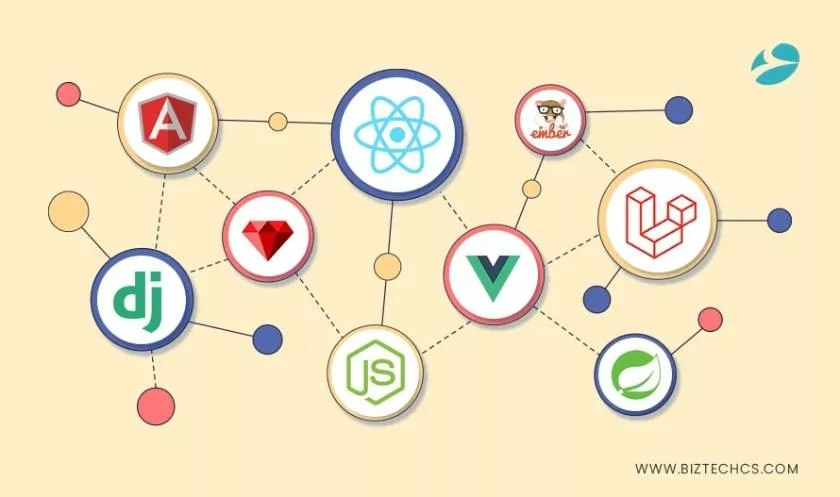
In this guide, we compare the most popular full-stack frameworks in 2026:,,, and. We likewise consist of, the structure we're developing. We think it's a compelling option in this area, and we wished to put it side by side with the recognized gamers so you can judge for yourself.
Modern Front-end Design Trends for Better Engagement
Beyond the normal criteria like designer experience and environment size, we likewise examine how well each structure has fun with AI coding tools like Cursor, Claude Code, Codex, Copilot, and OpenCode because in 2026, that matters especially. We focused on 5 criteria when assessing full-stack structures: How fast can you go from init to a deployed app? Just how much configuration and boilerplate do you (not) have to handle? Exist libraries, plugins, and guides for when you get stuck? Is it being actively maintained? How well does the framework work with AI coding assistants? Can an LLM comprehend your task structure and create right code? Can you deploy with a single command, or do you need to set up facilities by hand? Does the framework cover the client, server, and database layer, and how much assembly is needed? All five structures in this guide can be used for full-stack advancement, however they take different approaches: These are the original full-stack structures.
If your definition of full-stack is "handles whatever from HTTP request to database and back," these frameworks nailed it years back. Covers client-side rendering and server-side logic (API paths, server components), but the database layer is totally Bring Your Own (BYO).
Wasp takes a various method within the JavaScript ecosystem particularly. It uses a declarative setup file that explains your routes, authentication, database models, server operations, and more in one place. The compiler then creates a React + + Prisma application. Unlike Laravel or Bed rails, Wasp removes the requirement to choose and put together frontend solutions, and bundles whatever within a single mental design.
How AI-Driven Design Impact Frameworks in 2026?
Laravel has been the dominant PHP framework for over a years, and it shows no indications of slowing down., Laravel's community is massive and active.
Laravel's consistent conventions and outstanding documents mean AI tools can create reasonably accurate code. The PHP + JS split (if using Inertia or a React Day spa) means the AI requires to understand 2 separate codebases. AI-coding tools work well with Laravel, but the full-stack context is split throughout languages.
Bed rails 8.0 (launched late 2024) doubled down on simpleness with Kamal 2 for deployment, Thruster for HTTP/2, and the Strong trifecta (Solid Cable, Strong Cache, Strong Line) replacing Redis dependencies with database-backed alternatives. Rails has around and a loyal, experienced neighborhood. the ORM that motivated every other ORM deploy anywhere with zero-downtime Docker releases modern-day frontend interactivity without heavy JS database-backed infrastructure, no Redis required (new in Rails 8) batteries included for e-mail, jobs, and file uploads Convention over configuration suggests less choice tiredness Extremely productive for waste applications and MVPs Fully grown environment with gems for almost whatever Rails 8's "no PaaS" viewpoint makes self-hosting straightforward Strong opinions result in consistent, maintainable codebases Ruby's task market has actually shrunk compared to JS, Python, and PHP.
Bed rails' strong conventions make it reasonably foreseeable for AI tools. Like Laravel, the backend (Ruby) and any modern frontend (React through Inertia or API mode) are separate contexts the AI need to manage.

With roughly, Django has among the biggest open-source neighborhoods of any web framework. Its killer benefit in 2026? Python is the language of AI and information science, making Django a natural option for teams that require web applications securely incorporated with ML pipelines. effective, Pythonic database layer with migrations automatic admin interface from your models the de facto requirement for building APIs security-first by default NumPy, pandas, scikit-learn, PyTorch Frontend story is the weakest of the five.
Key Factors for Evaluating Enterprise CMS Software
If your backend does heavy information processing or integrates with AI designs, Django is a natural fit. Likewise excellent for federal government, education, and business contexts where Python is basic. Python is the language AI tools understand best, so Django backend code gets excellent AI support. The detach between Django's backend and a modern JS frontend indicates AI tools struggle with the full-stack image.

Latest Posts
Enhancing Scalability with Microservices Integration
Using New Digital Tactics for Maximum Growth
Refining B2B Workflows via Automation